Exploring Focus and Sensory Integration through Multi-Sensory VR
Role
Lead UX Researcher — research design, hypothesis formulation, experimental structure, data collection, analysis, interpretation, and research direction
Lead UX Researcher — research design, hypothesis formulation, experimental structure, data collection, analysis, interpretation, and research direction
Collaboration
Engineering & Implementation: Akshita Jain
Engineering & Implementation: Akshita Jain
Context
XR systems frequently assume that increased sensory stimulation enhances engagement and regulation for neurodivergent users. However, empirical evidence examining how specific sensory modalities—such as haptic feedback—affect focus and usability across neurotypes remains limited.
XR systems frequently assume that increased sensory stimulation enhances engagement and regulation for neurodivergent users. However, empirical evidence examining how specific sensory modalities—such as haptic feedback—affect focus and usability across neurotypes remains limited.
Research Question
How does haptic feedback influence focus, ease of use, engagement, and task performance in a VR environment, particularly for participants with ADHD compared to neurotypical users?
How does haptic feedback influence focus, ease of use, engagement, and task performance in a VR environment, particularly for participants with ADHD compared to neurotypical users?
Methods
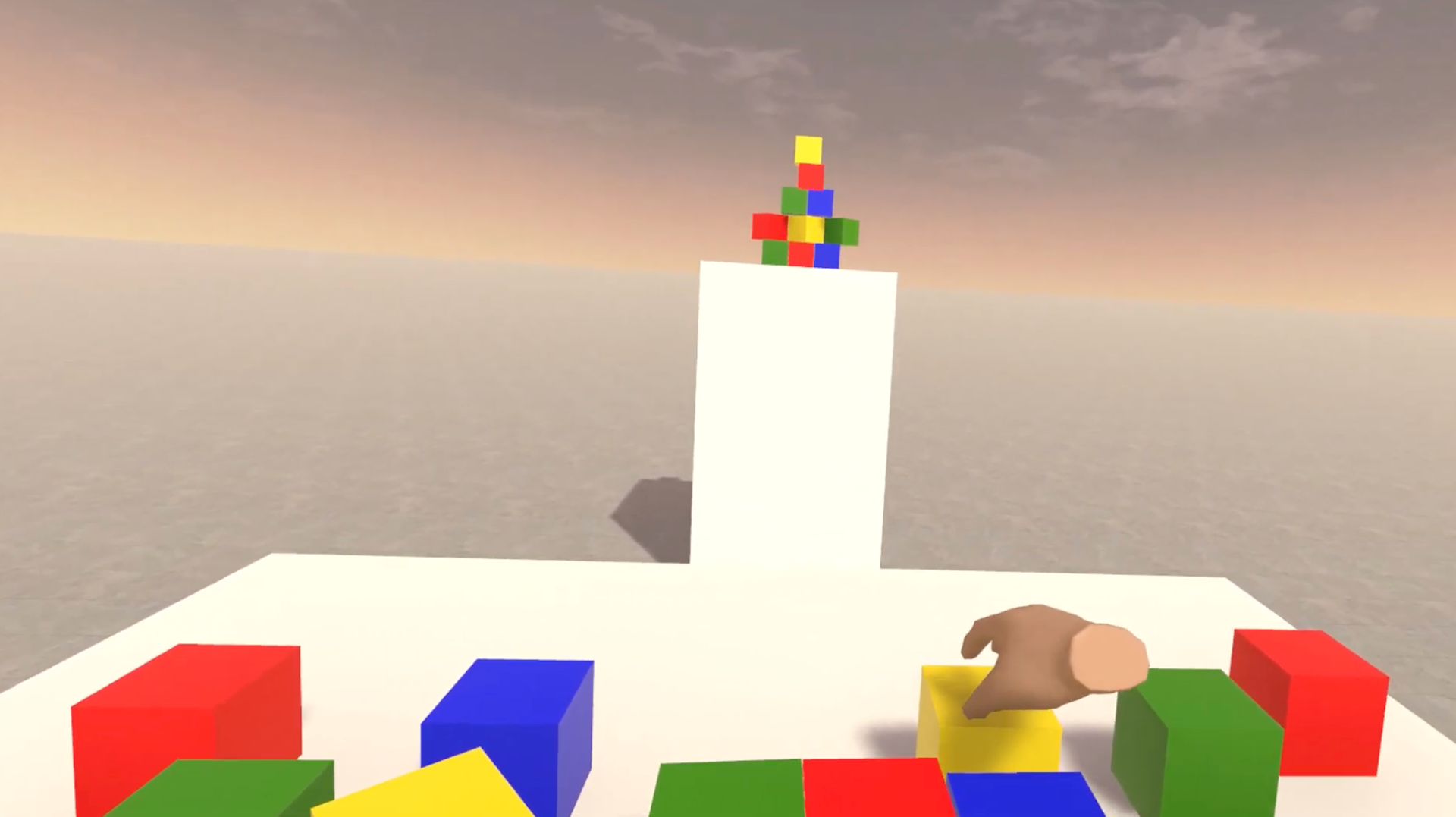
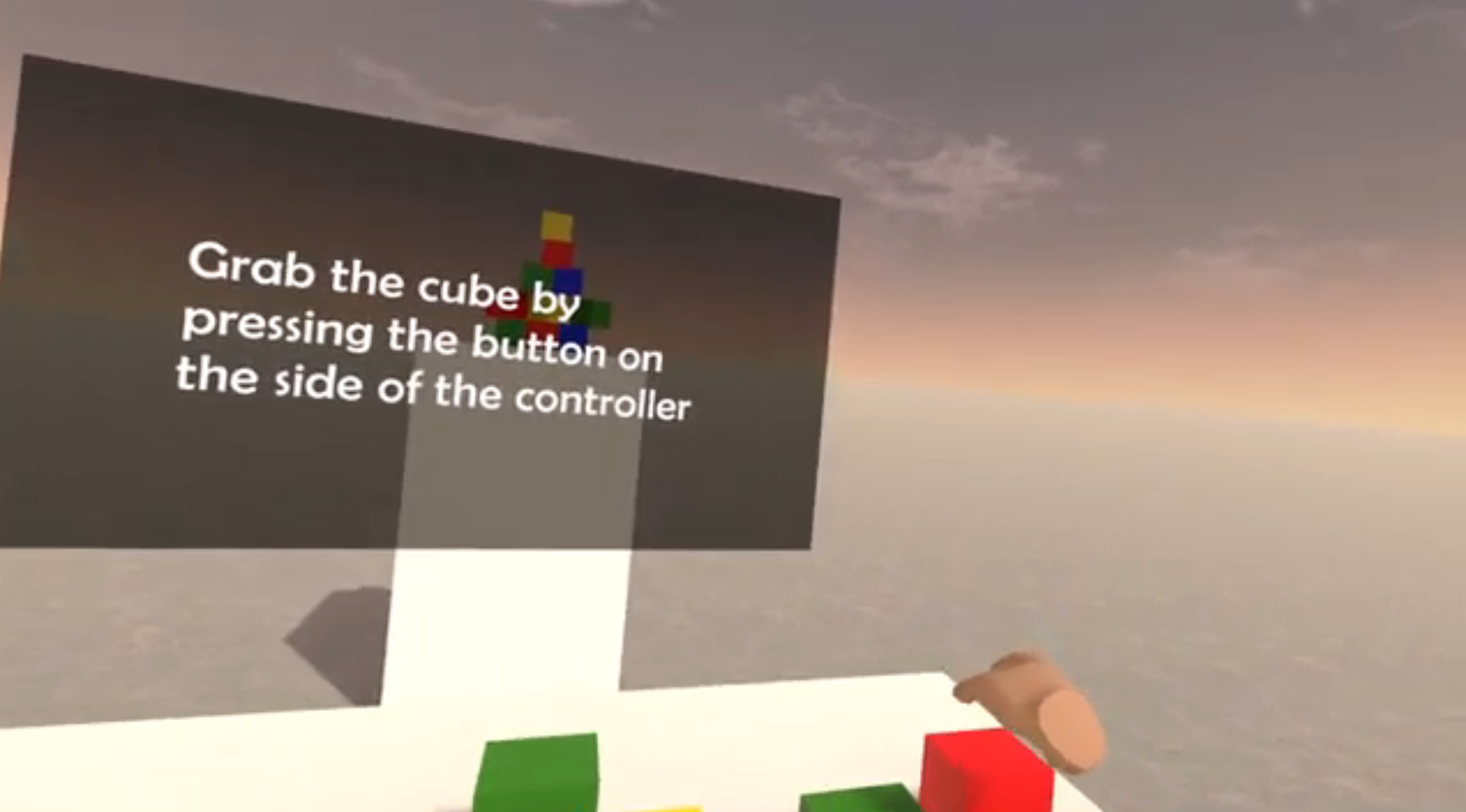
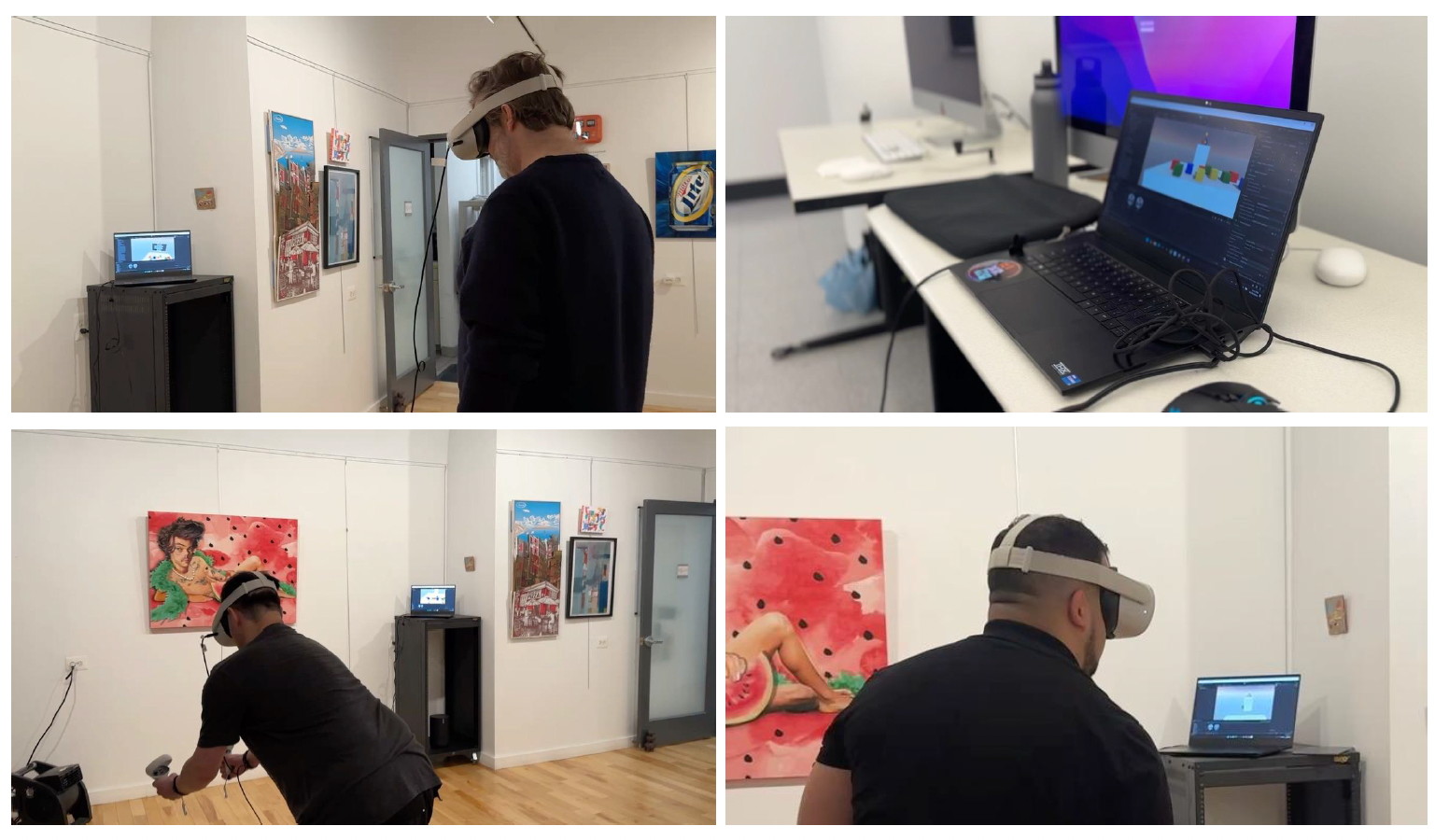
Within-subjects VR study (N = 20) using a Unity-based block-stacking task. Participants completed the task twice—once with vibration and once without—while reporting focus, calmness, ease of use, and engagement via pre- and post-task surveys. Task completion time and timeouts were recorded observationally.
Within-subjects VR study (N = 20) using a Unity-based block-stacking task. Participants completed the task twice—once with vibration and once without—while reporting focus, calmness, ease of use, and engagement via pre- and post-task surveys. Task completion time and timeouts were recorded observationally.
Primary Findings
Across all participants, focus and ease of use were reported more frequently in the no-vibration condition, while engagement remained high in both conditions (mean engagement score = 6.1 / 7). Completion-time data showed longer average task durations and more timeouts when vibration was enabled, particularly among participants with ADHD.
Across all participants, focus and ease of use were reported more frequently in the no-vibration condition, while engagement remained high in both conditions (mean engagement score = 6.1 / 7). Completion-time data showed longer average task durations and more timeouts when vibration was enabled, particularly among participants with ADHD.
Research Impact
Results contradicted the initial hypothesis that haptic feedback would support focus for ADHD users and redirected the project toward adaptive, user-controlled sensory design, shaping the goals and structure of Phase Two.
Results contradicted the initial hypothesis that haptic feedback would support focus for ADHD users and redirected the project toward adaptive, user-controlled sensory design, shaping the goals and structure of Phase Two.
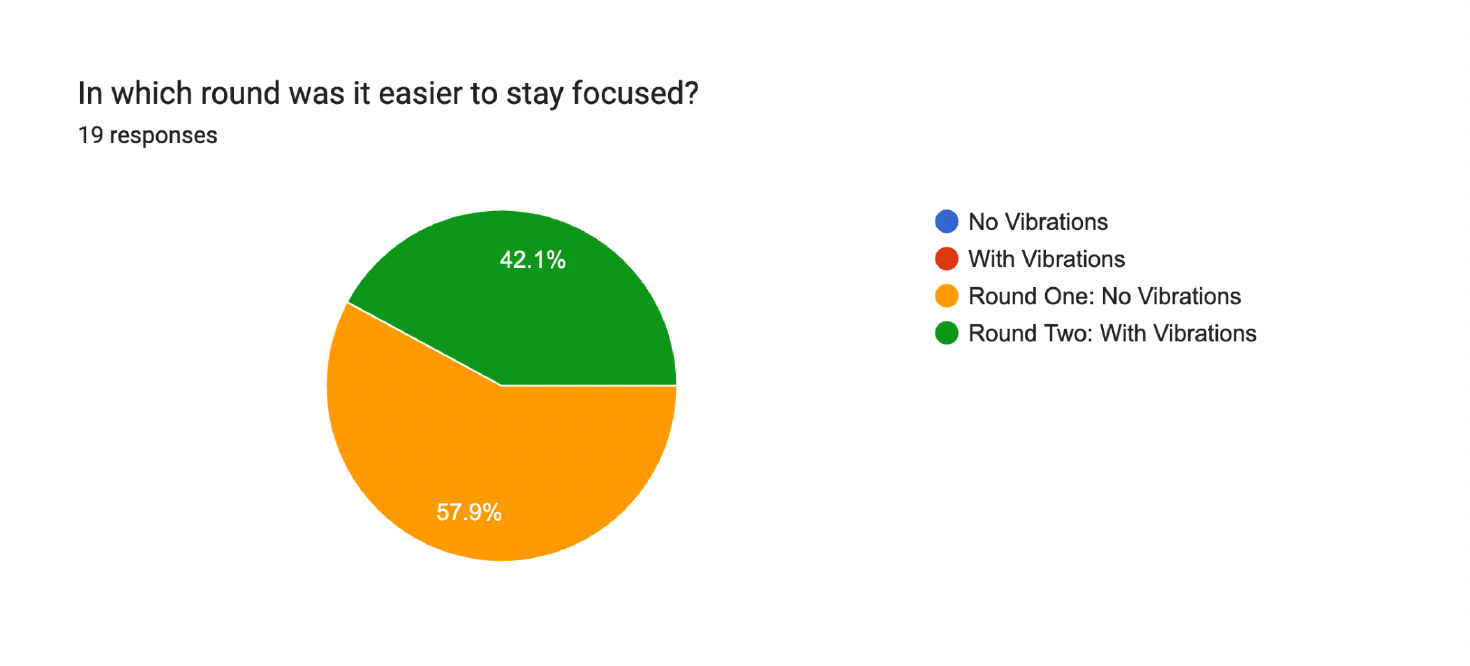
Focus and ease of use favored the no-vibration condition
Survey results show that 57.9% of participants reported better focus without vibration, compared to 42.1% with vibration, and 63.2% reported greater ease of use without vibration (vs. 36.8% with vibration). These results indicate that vibration introduced friction rather than improving usability for many participants.
Engagement remained high regardless of sensory condition
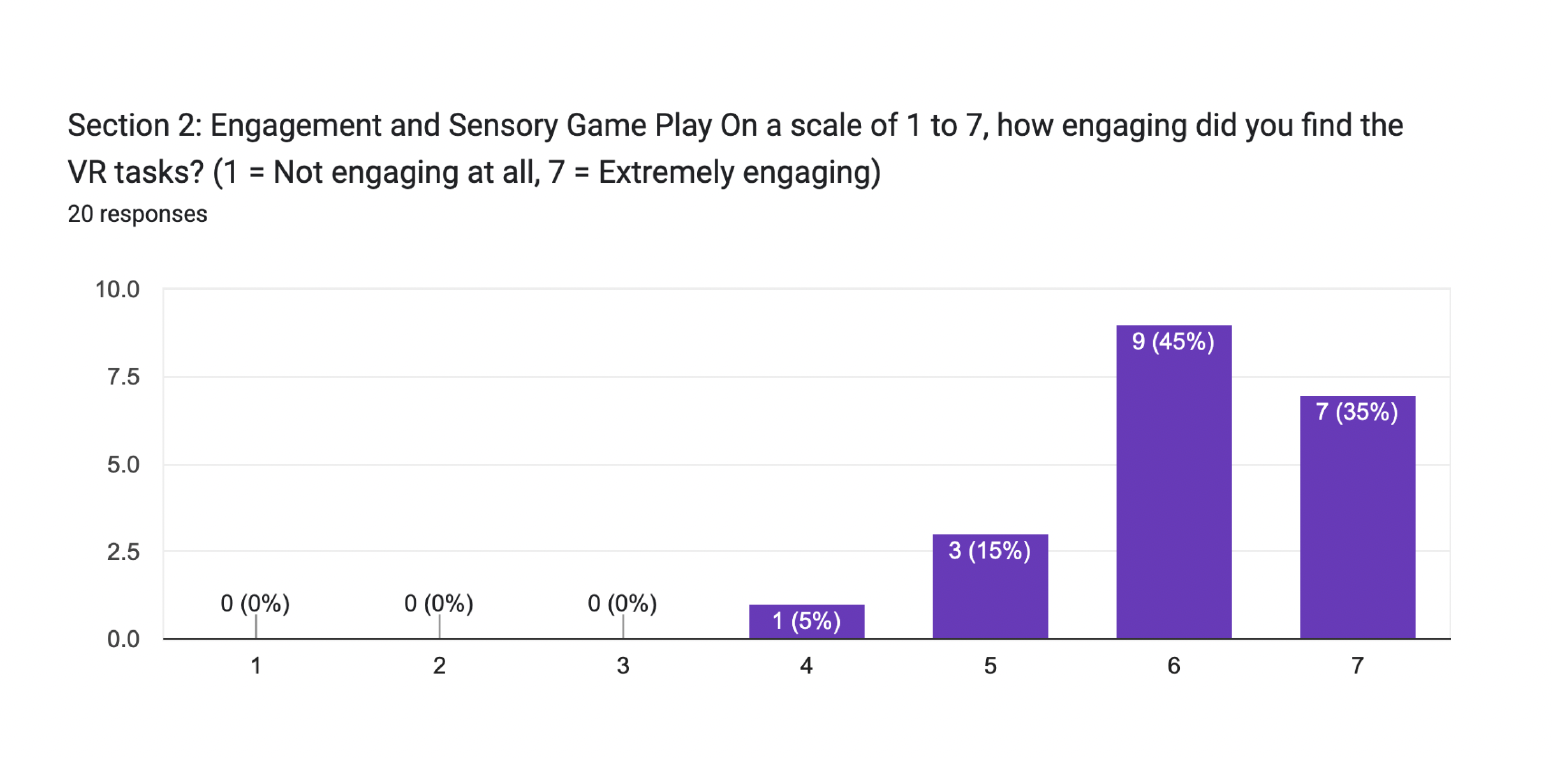
Despite usability and focus differences, participants rated the VR task as engaging across both conditions, with an average engagement score of 6.1 out of 7. This suggests that immersion alone does not reliably indicate accessibility or cognitive comfort
Haptic feedback increased completion time and timeouts
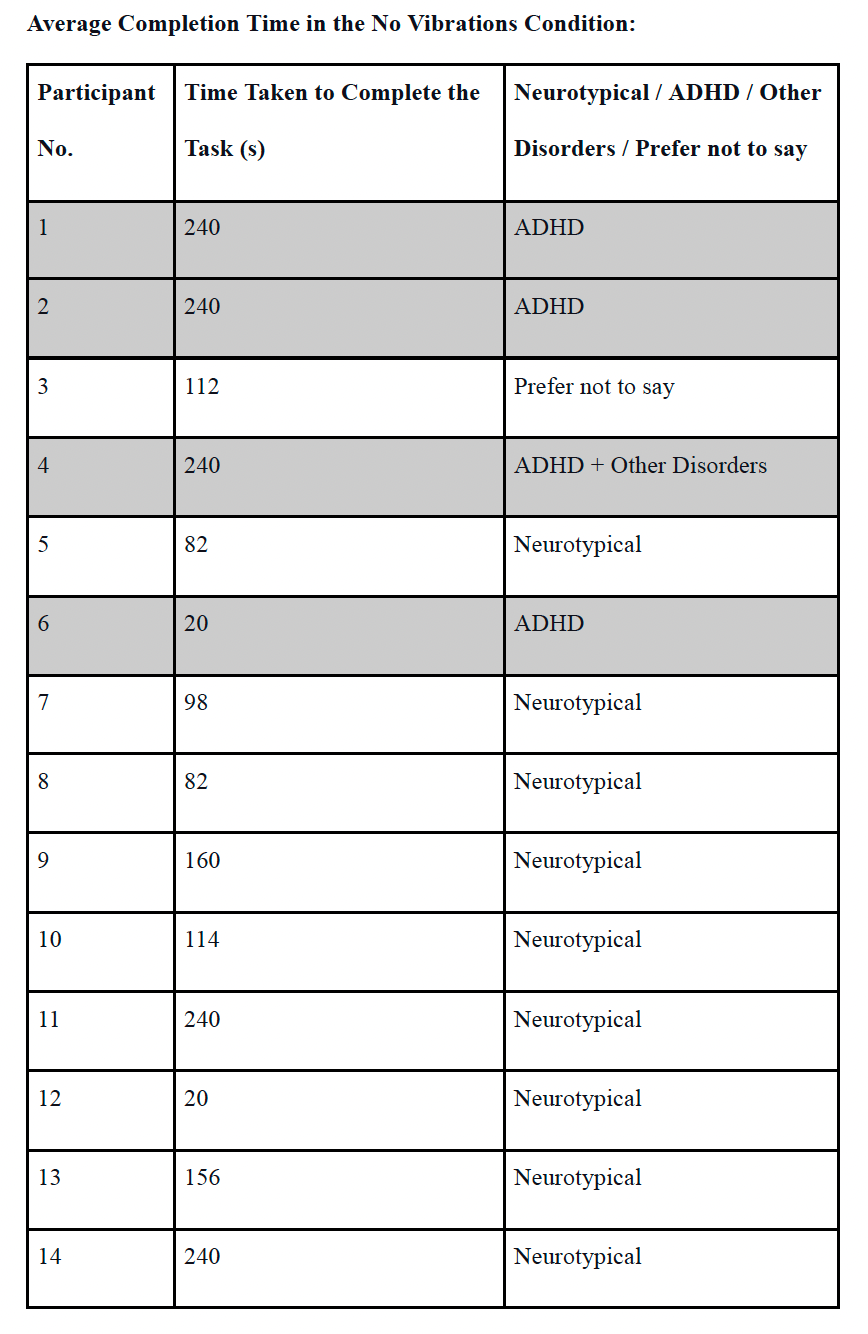
Completion-time tables show that average task duration increased under the vibration condition (163s vs. 137s overall), with a higher number of participants timing out. Participants with ADHD accounted for a notable proportion of timeouts in both conditions, particularly with vibration enabled.
Qualitative feedback highlighted control and environmental issues
Participant feedback clustered around challenges related to movement, controller mechanics, object stability, and environmental interaction, rather than task logic itself. Suggestions emphasized calmer environments and improved control responsiveness
Publication + Demo
Watch Demo Videos:
No Vibration Condition
Vibration Condition